
DPDP Act consent management built into your CRM
India's Digital Personal Data Protection Act, built into the CRM — not bolted on.
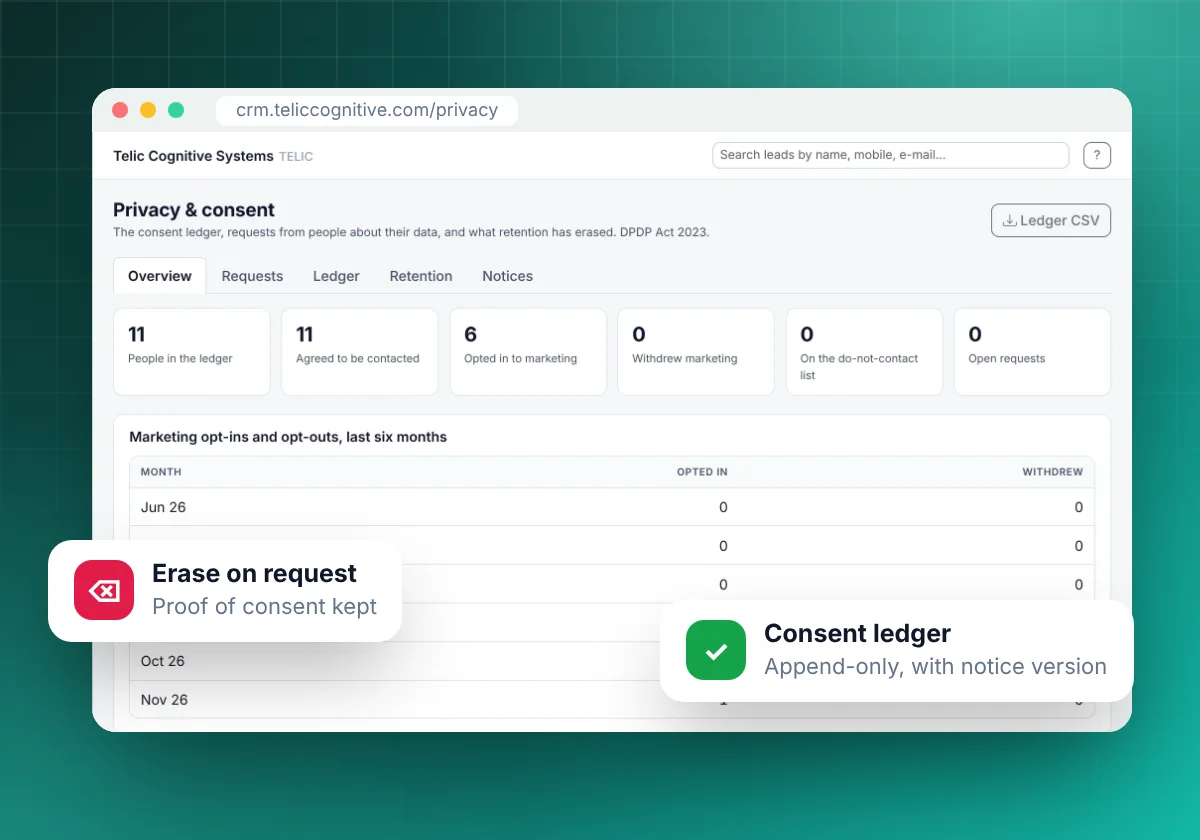
Most CRMs store a phone number and send messages to it. Under the DPDP Act a business must show what each person agreed to, stop when they withdraw, and erase data it no longer needs.
What it does
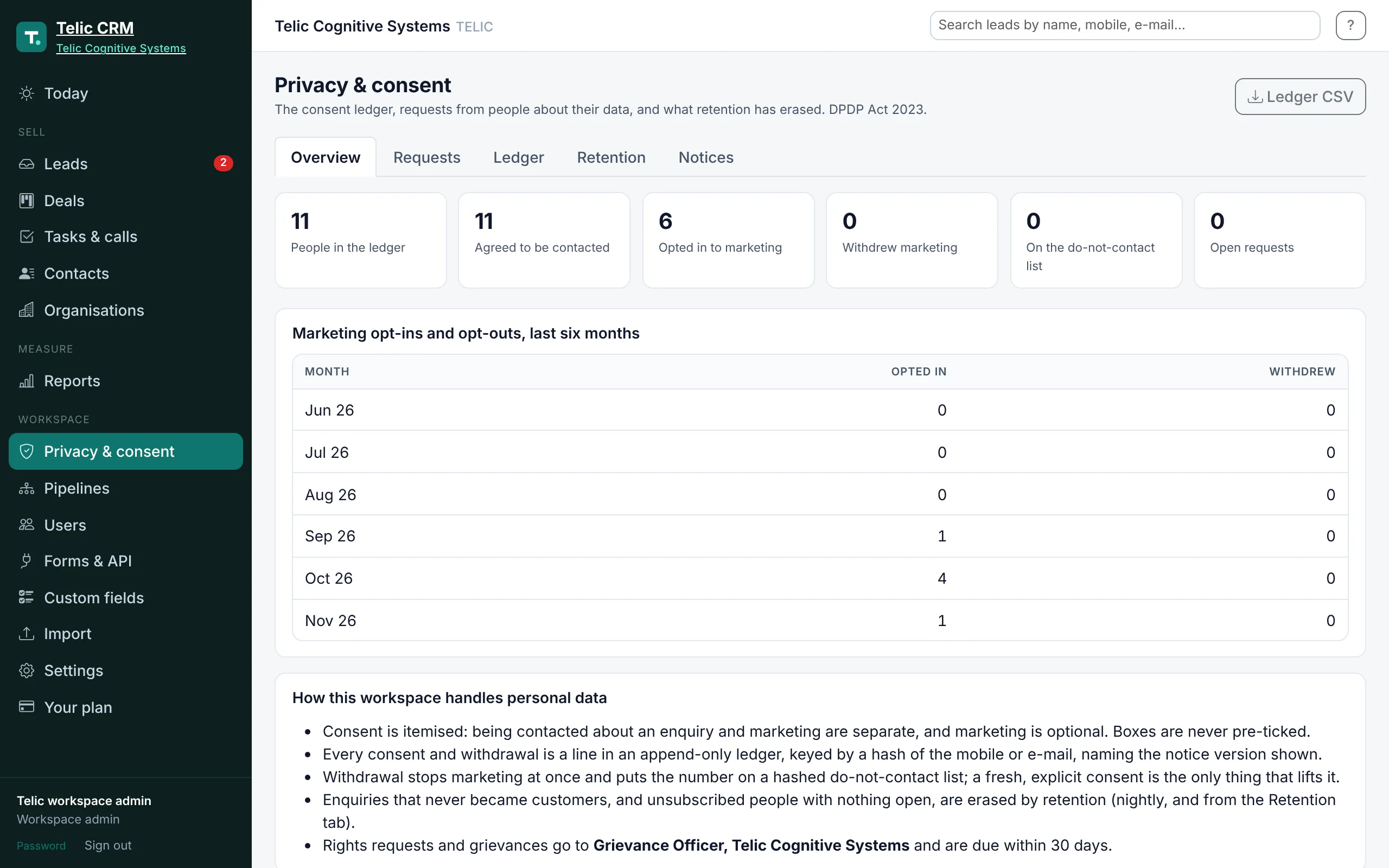
- Separate consent for being contacted about an enquiry and for marketing — never pre-ticked
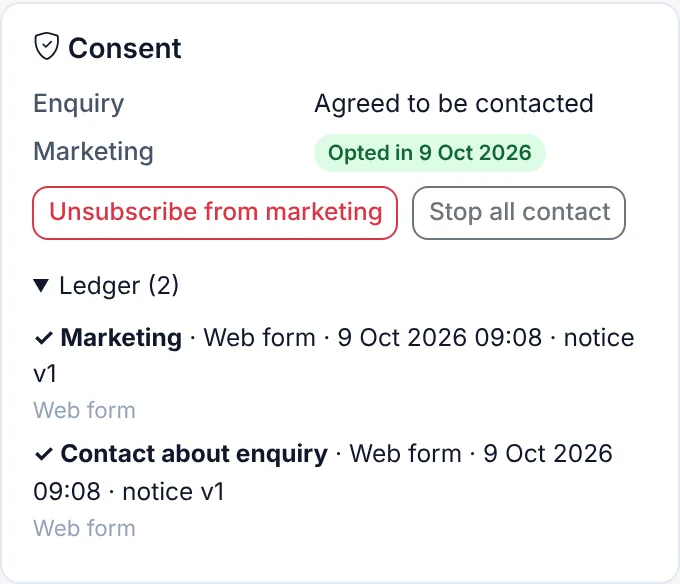
- An append-only consent record naming the channel and the version of the notice shown
- Unsubscribe link in every message; withdrawal stops marketing at once and goes on a do-not-contact list
- Requests to see, correct or erase data — logged with a due date and the reply on record
- Erasure that keeps the proof of consent; retention that erases what has served its purpose
- Consent for a child held against the parent or guardian
From first step to done
Ask properly
The form and the staff screen record each consent separately, with the notice version.
Respect it
Withdrawal, unsubscribe and erasure take effect at once and are recorded.
Show it
The consent ledger, requests and retention runs are one screen for your grievance officer.
More of privacy & consent (dpdp)
Privacy & consent (DPDP): frequently asked
Step-by-step help in the user guide:
Does Telic CRM take care of the DPDP Act for us?
No software can do that on its own. Telic CRM gives you the records and tools — consent ledger, notices, withdrawals, requests, erasure and retention — that your own compliance work relies on.
When do the DPDP obligations apply?
The DPDP Rules were notified on 13 November 2025. Most obligations for businesses, including notice, consent, breach reporting and erasure, apply from 13 May 2027.
How is a child's data handled?
An enquiry for a child records the parent or guardian and their consent, and marketing is never sent to the child.
See it with your own leads
A 30-minute demo on your process, or a trial workspace set up for your industry.